LAW • CONSTITUTION • ANALYSIS
Presidential Pardons vs Judicial Independence: What the Gnanasara Ruling Actually Means
Article 34 gives Sri Lanka’s President a significant power of clemency. The constitutional question is whether that power can be exercised without meaningful limits — and the Supreme Court’s answer is increasingly clear.
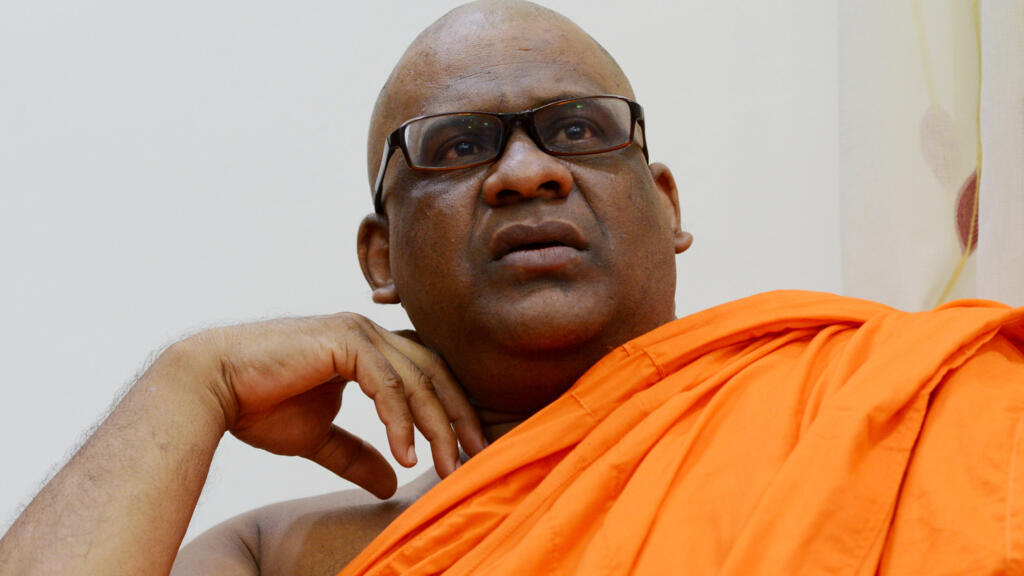
Ven. Galagoda Aththe Gnanasara Thera. File photograph.
The pardon power is real — but it is not beyond review
Article 34 of Sri Lanka’s Constitution gives the President power to grant pardons. But recent Supreme Court decisions have rejected the proposition that presidential clemency is an unfettered personal discretion. The Court has treated the power as a constitutional function that must comply with required procedure, rationality, equality and the public trust placed in the office.
That principle has emerged through several important pardon cases, including the decisions concerning Duminda Silva and Ven. Galagoda Aththe Gnanasara Thera. In September 2026, the Supreme Court invalidated the 2019 pardon granted to Gnanasara Thera by former President Maithripala Sirisena. Reporting on the judgment states that the Court found the pardon arbitrary and inconsistent with constitutional safeguards, including equality before the law.
Why procedure matters
The constitutional procedure is not a technical formality. In pardon cases where the Constitution requires reports and advice from judicial and legal authorities, those safeguards exist to prevent executive clemency from becoming political favour. The Supreme Court has emphasised in its pardon jurisprudence that meaningful compliance is required, rather than a mechanical exercise.
This matters beyond one monk or one former President. If a President could simply erase a judicial sentence for a political ally without proper process, the final authority of courts would be weakened. Equally, if the pardon power became impossible to exercise even in deserving cases, Article 34 itself would lose much of its purpose. The constitutional balance therefore lies in lawful, reasoned clemency subject to review.
What Gnanasara Thera was convicted of
Gnanasara Thera’s six-year sentence arose from contempt-of-court proceedings connected with events at the Homagama Magistrate’s Court during proceedings concerning the disappearance of journalist Prageeth Eknaligoda. The Court of Appeal convicted him in 2018. After the Supreme Court invalidated the pardon, the Court of Appeal ordered the sentence reactivated in October 2026.
The legal principle is uncomfortable but important: religious office does not itself create immunity from contempt proceedings. Courts must be able to conduct proceedings without obstruction or intimidation, regardless of whether the person involved is a politician, monk, activist, business leader or ordinary citizen.
Article 9 and the Buddha Sasana
The controversy nevertheless raises a separate and legitimate constitutional question. Article 9 gives Buddhism the foremost place and places a duty on the State to protect and foster the Buddha Sasana. Many monks and Buddhist organisations argue that the dignity of ordained clergy should therefore be respected when the criminal justice system deals with members of the Sangha.
That concern should not simply be dismissed. Questions such as appropriate clothing, accommodation, religious observance and treatment while imprisoned can be considered without creating immunity from criminal law. The Government has itself moved to review rules governing imprisoned monks.
But Article 9 must operate alongside the rest of the Constitution. Article 12 guarantees equality before the law and equal protection of the law. Protecting the Buddha Sasana and maintaining equal legal accountability do not have to be contradictory principles.
A test that should apply to everyone
The strongest constitutional position is therefore neither “monks are above the law” nor “their religious status is irrelevant in every respect.” A democratic state can respect the Sangha while still enforcing valid court orders. It can accommodate religious dignity while refusing legal immunity. And it can exercise presidential mercy while requiring the President to explain and lawfully justify that exercise.
The diaspora question requires evidence
The controversy has also become entangled with claims about Tamil and overseas diaspora influence. Minority and diaspora organisations have long criticised perceived selective enforcement and political leniency toward nationalist figures. Those criticisms are part of the public debate and can legitimately be examined.
But the reverse allegation — that the present enforcement of Gnanasara Thera’s sentence is being undertaken to satisfy the LTTE diaspora — requires evidence before it can be stated as fact. A court judgment invalidating a pardon is not, by itself, evidence of external political control. Lanka Witness believes allegations of foreign lobbying or political pressure should be investigated where evidence exists, but the same evidentiary standard must apply to every side.
The precedent is bigger than Gnanasara
The lasting importance of the case may therefore have little to do with the popularity or politics of Gnanasara Thera. The precedent constrains future Presidents as well. A government cannot credibly demand judicial independence when it is in opposition and then expect unlimited executive clemency when it holds power.
The proper question is simple: would we accept the same legal rule if the person receiving the pardon belonged to the opposite political, religious or ethnic camp? If the answer changes with the identity of the individual, Sri Lanka has not yet achieved equality before the law.
Lanka Witness analysis. This article distinguishes judicial findings from political claims and allegations. It will be updated if further primary-source material changes the factual position.